

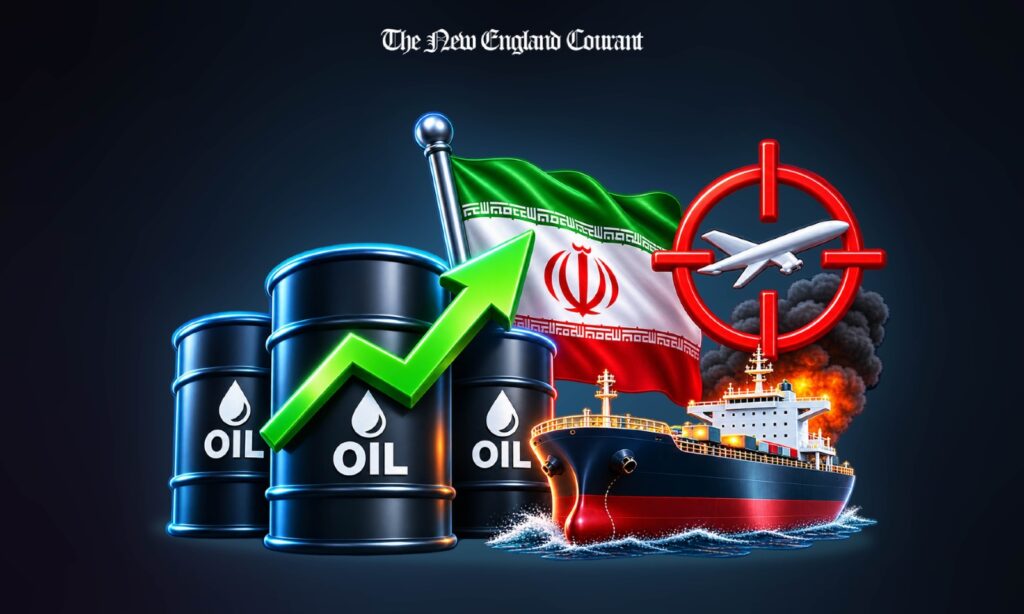
Global oil prices recovered on Wednesday after falling to their lowest levels in two months, as renewed attacks on commercial shipping in the Strait of Hormuz raised concerns about energy supplies and weakened optimism surrounding a possible agreement between the United States and Iran.
Brent crude futures climbed 1.1% to $92.53 per barrel, while US West Texas Intermediate (WTI) rose 0.8% to $86.71 by 0420 GMT on November 11. The recovery followed a sharp decline in the previous trading session, when oil prices initially dropped by more than $3 a barrel after US officials indicated that further military strikes against Iran were unlikely.
The latest market movement highlights the uncertainty surrounding the Middle East conflict. Although diplomatic signals have raised expectations of de-escalation, continued threats to commercial vessels suggest that the risks to international energy transportation remain significant.
Shipping security has become a central concern for oil traders. According to data from the Washington Institute for Near East Policy cited by Reuters, 37 vessels were attacked in the Strait of Hormuz and surrounding waterways during October, the highest monthly total since the Middle East war began. Recent incidents indicate that the threat has continued into November.
The United Kingdom Maritime Trade Operations (UKMTO) agency reported that a tanker was struck northeast of Oman. Separately, Iran’s Revolutionary Guards Navy said that two tankers had caught fire after hitting naval mines while travelling along what it described as an unauthorised route through the strait. These claims underline the competing security narratives surrounding maritime activity in the region.
The attacks have increased uncertainty for shipping companies, energy traders and insurers. Even if Washington and Tehran reach a diplomatic agreement, restoring normal commercial traffic could take time. LSEG Oil Research warned in a November 10 note that increased oil flows through the waterway would depend on clearing naval mines, reducing insurance costs and convincing shipowners that the route is safe enough to use.
This distinction is important for global energy markets. A ceasefire could reduce the immediate risk of military escalation, but it would not automatically restore the shipping capacity required to move oil reliably. Tanker operators may continue avoiding high-risk routes, while insurers could maintain elevated premiums until security conditions improve.
The Strait of Hormuz is one of the world’s most important energy transportation corridors, connecting major Gulf oil producers with international markets. Disruptions in the waterway can affect crude exports, shipping schedules and energy prices across regions that depend heavily on imported fuel.
For oil-importing countries, prolonged instability could increase the cost of securing supplies and place additional pressure on national energy budgets. Economies in Asia, which rely substantially on energy shipments from the Middle East, are particularly exposed to disruptions in Gulf maritime trade. Higher oil prices can also increase transport, manufacturing and electricity costs, potentially adding to inflation.
Businesses involved in aviation, logistics, shipping and manufacturing may face higher operating expenses if fuel prices and maritime insurance premiums remain elevated. Companies with limited flexibility to pass these costs on to customers could experience pressure on profit margins. Consumers may eventually face higher prices for transport and other fuel-intensive goods if the increase in energy costs persists.
However, the market is not responding exclusively to geopolitical developments. Additional supply-related factors are also influencing expectations. Reuters reported that US crude inventories increased by approximately nine million barrels in the week ending November 6, according to data from the American Petroleum Institute cited by market sources. Higher inventories can signal weaker demand or greater available supply, potentially limiting price increases.
Developments in Russia are adding another layer of uncertainty. Ukrainian drone attacks have reportedly reduced Russian oil-refining capacity by around 30% since late October, according to industry sources cited by Reuters. Separately, a drone attack caused a fire in the port area of Ust-Luga on Russia’s Baltic Sea coast, injuring three workers, according to a regional governor.
These developments demonstrate how energy markets are being influenced by several overlapping conflicts and supply risks rather than a single geopolitical event. While hopes of an Iran agreement may reduce fears of a wider regional confrontation, attacks on shipping and energy infrastructure elsewhere continue to complicate the global supply outlook.
For investors, the latest rebound shows how quickly oil prices can change in response to developments around the Strait of Hormuz. Traders must balance expectations of increased supply and diplomatic progress against the possibility of further attacks, shipping delays and disruptions to production or refining.
Governments may also face difficult decisions if instability continues. Countries dependent on imported energy could need to review strategic petroleum reserves, diversify suppliers and prepare for potential price volatility. Shipping authorities and maritime security organisations will also have a significant role in determining how quickly commercial traffic can return to normal.
The immediate direction of oil prices will depend partly on whether diplomatic efforts between Washington and Tehran produce meaningful progress. However, the longer-term recovery of energy shipments will require more than political assurances. Vessels must be able to travel safely, maritime risks must be reduced and shipping companies must regain confidence in the route.
For now, the latest rise in crude prices reflects a market that remains cautious about the possibility of lasting peace. Diplomatic progress may ease some concerns, but as long as commercial vessels face threats in the Strait of Hormuz, the risk of further disruption to global energy supplies will remain.
