

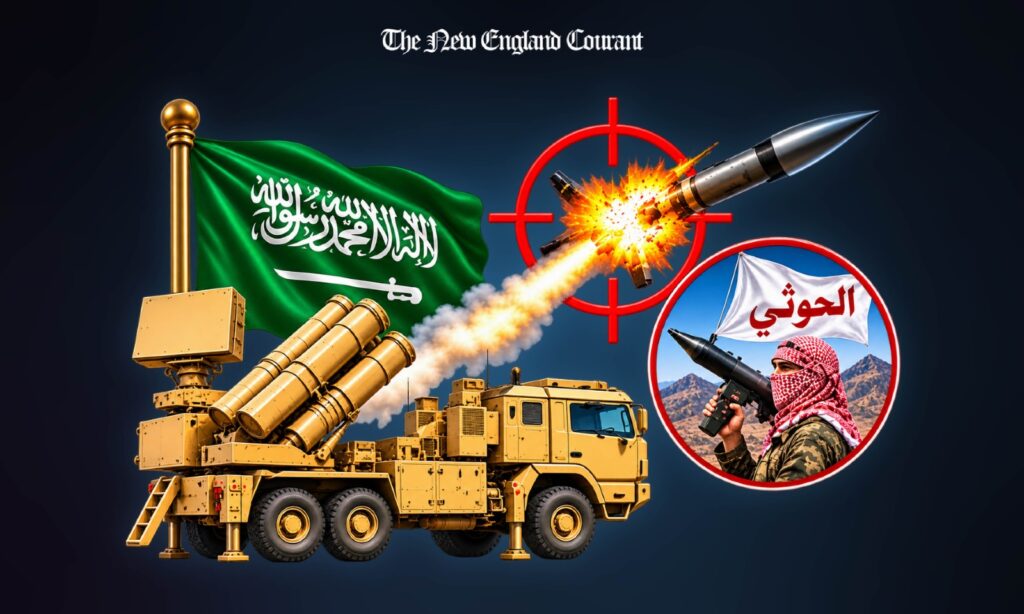
Saudi Arabia said on Friday it had shot down another ballistic missile fired from Yemen. The attack shows that the fighting between the kingdom and Yemen’s Houthi movement is not slowing down.
The Saudi-led coalition said early Friday that its air defences had intercepted and destroyed a missile launched by the Iran-aligned Houthis towards the kingdom’s southern region. Coalition spokesperson Turki al-Malki confirmed the interception. AFP reported that the coalition also said it had brought down two drones fired towards the same region.
Before the all-clear, Saudi Civil Defence sent early-warning alerts to several southern areas, including Jazan, Abha and Khamis Mushait. No damage or injuries had been reported from Friday’s attack at the time of writing.
On the other side of the border, Houthi-run Al-Masirah TV reported Saudi airstrikes on the Yemeni capital Sanaa on Friday. Saudi Arabia had not commented on those reports, and they could not be independently verified.
The interception came less than a day after one of the most visible attacks of the conflict so far. On Thursday, Nov. 19, a Houthi missile attack damaged Riyadh’s tallest building. It blew out windows at the headquarters of the Public Investment Fund, Saudi Arabia’s sovereign wealth fund. It was the second attack on the capital’s financial district this month. Three people familiar with the incident told Reuters the missile struck the tower directly. The coalition said its first assessment pointed to damage from debris. Hours earlier, debris from another intercepted missile damaged a building in Riyadh owned by oil giant Saudi Aramco.
Southern Saudi Arabia, which borders Yemen, has long been a frequent target. Khamis Mushait is home to King Khalid Air Base, which the Houthis have repeatedly said they attacked. Jazan, on the Red Sea coast, has a large Aramco refinery that processes about 400,000 barrels of oil a day.
The latest wave of attacks broke a long period of calm. A UN-brokered truce in 2022 had largely ended cross-border fighting, but attacks resumed in July, and the Houthis have since sharply increased their missile and drone strikes on Saudi territory. Their targets have included airports, oil facilities and office buildings. The fighting is connected to the wider regional war involving Iran. Saudi authorities say at least 26 people have been killed in suspected Houthi drone and missile attacks in the kingdom since Sept. 23. The Houthis have also accused the coalition of carrying out dozens of airstrikes on areas under their control.
These attacks matter well beyond the border. For energy markets, repeated threats to Saudi oil sites, including the East-West pipeline that carries crude to Red Sea export terminals, add to concerns about global oil supply and could push prices up. For businesses and investors, a strike on the sovereign wealth fund’s headquarters hits the centre of Saudi Arabia’s plans to attract foreign money and diversify its economy, and may make companies think twice about operating there. For travellers and airlines, the Houthis’ attacks on Saudi airports have already grounded flights several times, and more disruption is possible. For governments, the conflict raises the risk of a wider regional war and puts more pressure on mediators to restore the truce. For civilians in Yemen, renewed fighting means more danger in a country already facing one of the world’s worst humanitarian crises.
There are no signs that either side is ready to stop. Diplomats are trying to revive talks, but the missile alerts across southern Saudi Arabia show that the danger is far from over.
